Givluv.nl
2025
How a 3-Way Split Payment Simplified Multi-Party Transactions
I redesigned the payment experience for Givluv, an e-commerce marketplace that enables merchants to support charities by donating a portion of each sale. By introducing a 3-way split payment flow with OPP, I helped create a more transparent and trustworthy experience while addressing complex financial and regulatory requirements.

Overview
Simplifying Multi-Party Transactions with a 3-Way Split Payment
The existing payment experience created unnecessary friction throughout the transaction journey. Stripe onboarding was difficult for many users, while managing payments between buyers, sellers, charities, and the platform introduced additional complexity. These challenges reduced transparency, increased compliance concerns, and made completing transactions less reliable.
Problem
Multi-party payments were difficult to complete
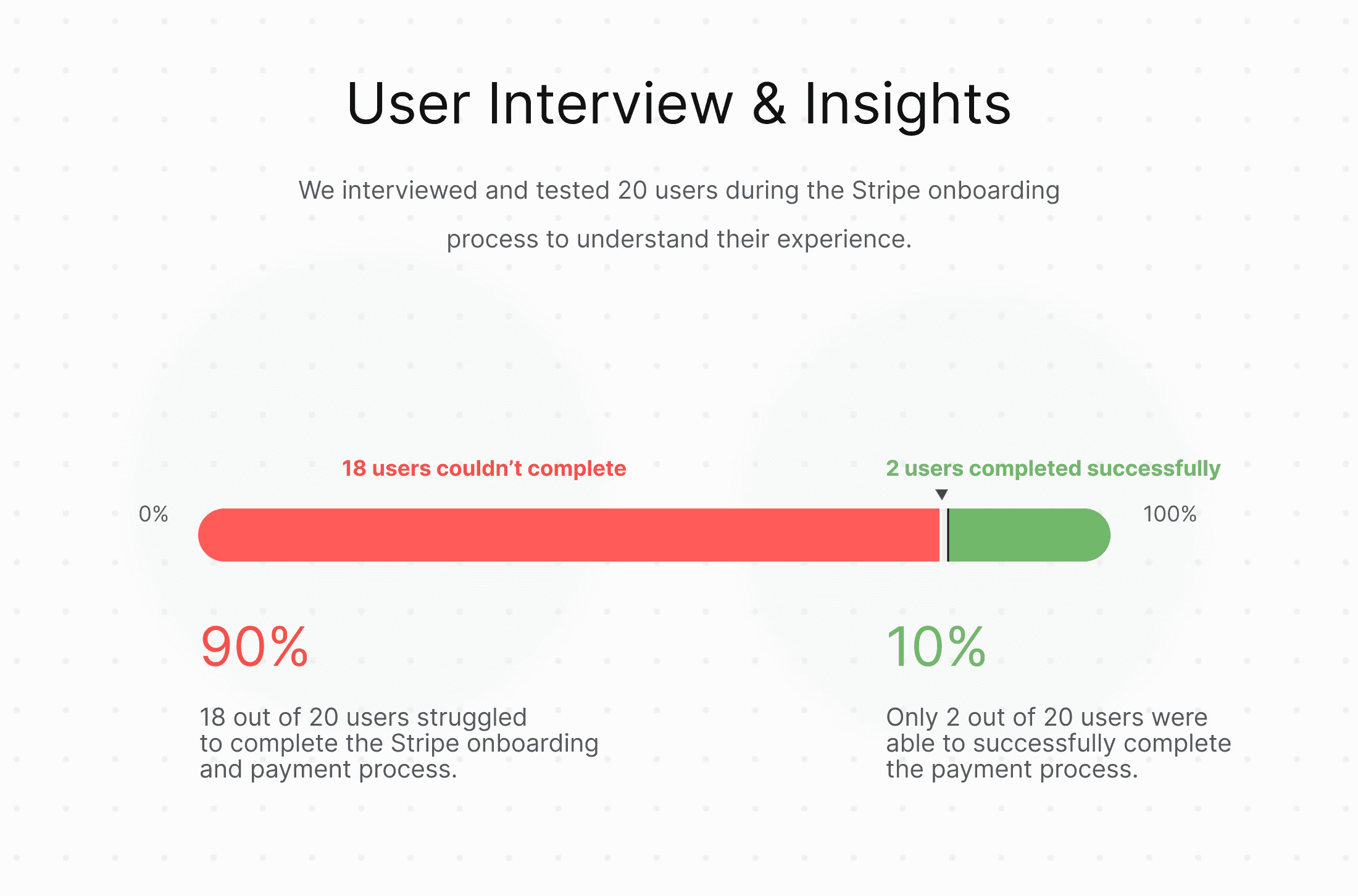
User interviews, usability tests with ten participants, and stakeholder discussions revealed that the payment experience introduced unnecessary friction. Most users struggled during Stripe onboarding, while the underlying payment architecture created challenges around trust, compliance, and transaction completion.
Stripe Onboarding Friction
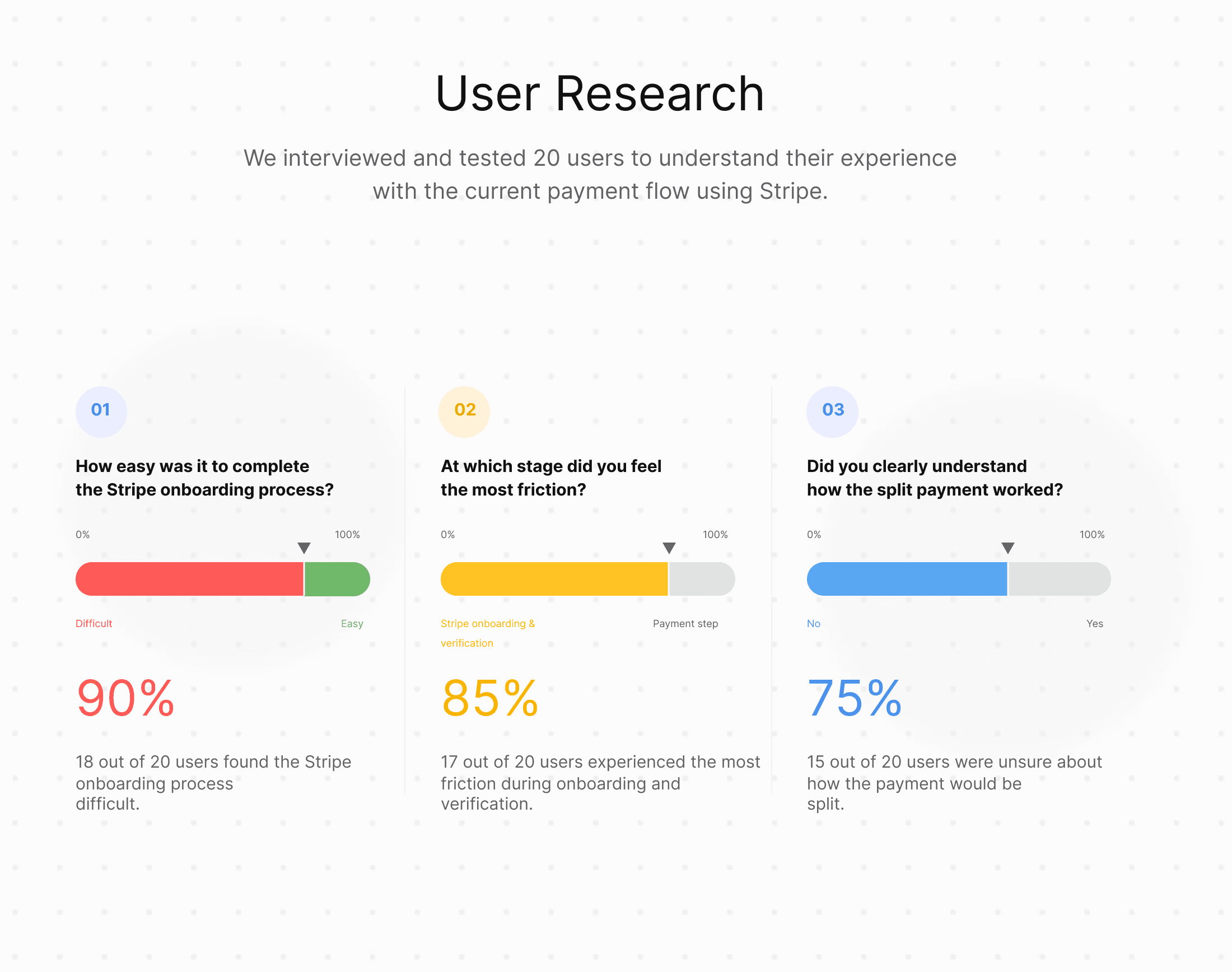
Nearly all participants encountered difficulties during Stripe account setup and verification, creating barriers before they could start receiving or contributing funds.
Complex Multi-Party Payments
Because transactions involved merchants, charities, and the platform, funds needed to be held, distributed, and tracked according to regulatory requirements. These constraints introduced complexity and increased the risk of fraud and financial compliance issues.
Incomplete Transaction Scenarios
Another challenge emerged when one participant completed their payment while others had not. Bringing users back to complete their share later created friction and increased the likelihood of abandoned transactions

01 - Weak hierarchy, 02 - Inconsistent spacing, 03 - Workflow friction
Research & Discovery
Looking beyond the numbers
To better understand the challenges around charitable transactions and payment distribution in the Givluv marketplace, I conducted user research, reviewed existing payment flows, and collaborated closely with product, business, and engineering stakeholders. The goal was to identify sources of confusion, trust concerns, and operational constraints affecting the payment experience.
Research Methods
Interviews with approximately 10 marketplace users
Analysis of existing payment journeys and transaction scenarios
Stakeholder workshops with product, engineering, and business teams
Review of technical, legal, and compliance requirements
Key Findings
Unclear payment responsibilities
Many users were unsure who was responsible for paying the charity contribution and at what stage of the transaction it should occur.
Complex transaction flow
In some scenarios, users had to complete multiple payment-related actions across different stages, creating unnecessary friction and increasing drop-off risk.
Lack of transparency and trust
Users wanted greater clarity around how funds were handled, when charity contributions were transferred, and how payment confirmations and receipts were generated.
Technical and compliance constraints
The solution needed to work within the capabilities of the OPP payment infrastructure while supporting payment splitting, charity contributions, fund holding, and compliance requirements such as AML regulations.
Key Insight
Users needed a payment experience that clearly communicated where money goes, who is responsible for each step, and what happens after payment. Reducing uncertainty and making the process transparent became the primary design goal.
Ideation
The new payment flow streamlined complex marketplace transactions
The payment experience was redesigned with a focus on trust, transparency, and flexibility.
3-Way Split Payment Architecture
Using OPP APIs, a dedicated payment flow was introduced to automatically split transactions between multiple parties while respecting financial constraints and compliance requirements.
Guided Stripe Onboarding
The onboarding experience was simplified to help users complete account verification with greater confidence.
Clear Payment States
Payment summaries and status indicators improved visibility into contribution amounts, held funds, payout stages, and transaction progress.
Support for Delayed Completion
The flow was designed to support scenarios where participants completed payments at different times, reducing the risk of incomplete transactions.

Exploring different dashboard concepts focused on hierarchy, transaction visibility, and clearer everyday financial workflows.
Results
Reduced Payment Friction
Reduced Payment Friction
Users were able to navigate the payment experience with greater confidence.
Improved Transparency
Clear payment states increased trust and made transaction progress easier to understand.
Stronger Trust and Compliance Foundation
The new architecture supported complex payment scenarios while reducing financial and fraud risks.
Scalable Marketplace Infrastructure
The split-payment system established a foundation for supporting future payment and donation scenarios.

